A symphonic journey through childhood, love and the world of adults.
Symphonic Suite
THE JOURNEY BEGINS WITH A SINGLE NOTE
01 / Symphonic Suite
A story written for the orchestra.
Aleksandra Naumovski Potisk
Music in which the fragility of childhood meets the contradictions of adulthood.
The suite was composed between April and July 2024, commissioned by SNG Opera in balet Ljubljana. The score spans nearly 250 pages and comprises nineteen numbered scenes and an intervening Transition. Its literary inspiration is The Little Prince by Antoine de Saint-Exupéry.
Instrumentation 2 flutes and piccolo, 2 oboes, 2 clarinets in B-flat, 2 bassoons; 2 horns, 2 trumpets in B-flat or C, 2 trombones and tuba; timpani, percussion, harp, celesta and strings.
A child’s perspective is more than innocence. It also holds longing, ideals and the inability to say goodbye.
Although The Little Prince is often classified as children’s literature, its melancholy beauty also speaks to adult readers. The same is true of the suite: the child’s perspective is the starting point, with more complex psychological and emotional processes unfolding beneath it.
The composer’s concept highlights two interconnected strands: love and puer aeternus — the eternal boy. Love permeates the entire narrative, most clearly in the relationship with the Rose. It reflects both the idealised beauty of intimacy and the demands of a real relationship; the composer’s interpretation also links it to the writer’s relationship with his wife Consuelo.
The second strand draws on Marie-Louise von Franz’s Jungian interpretation of The Little Prince. The eternal youth remains attached to freedom, imagination and childhood ideals, while struggling to accept the limitations of everyday life and lasting responsibility towards another person.
In this interpretation, the Pilot and the Little Prince are two sides of the same personality. The plane crash opens up a space of inner disintegration and confrontation: the adult encounters the child within, whom he cannot let go. Idealised love remains in tension with its possible fulfilment in adult life.
The suite’s musical dramaturgy grows out of the composer’s interpretation, connecting love, the archetype of the eternal youth and the inner relationship between the Pilot and the Little Prince.
03 / Structure
Nineteen scenes. One journey.
Overture, introductions, journey and conclusion. An independent Transition is placed between Scenes VI and VII.
IOverture
IIThe Pilot
IIIThe Desert
IVThe Encounter
VThe Little Prince’s Planet — Asteroid B612
VIThe Rose
↝Transition — The Little Prince’s Journey
VIIThe King
VIIIThe Lamplighter
IXThe Vain Man
XThe Businessman
XIThe Drunkard
XIIThe Geographer
XIIIThe Earth
XIVThe Snake
XVThe Rose Garden — Ritornello
XVIThe Pilot and the Rose — Dream Waltz
XVIIThe Fox — Tango
XVIIIFarewell
XIXFinale
04 / Themes and motifs
Two principal themes. Derivations and transformations.
Recurring motifs change with the story. Most of the thematic material grows from two principal themes: the Little Prince’s and the Rose’s.
Principal themes
I / The Little Prince’s theme
Perfect and diminished fifths
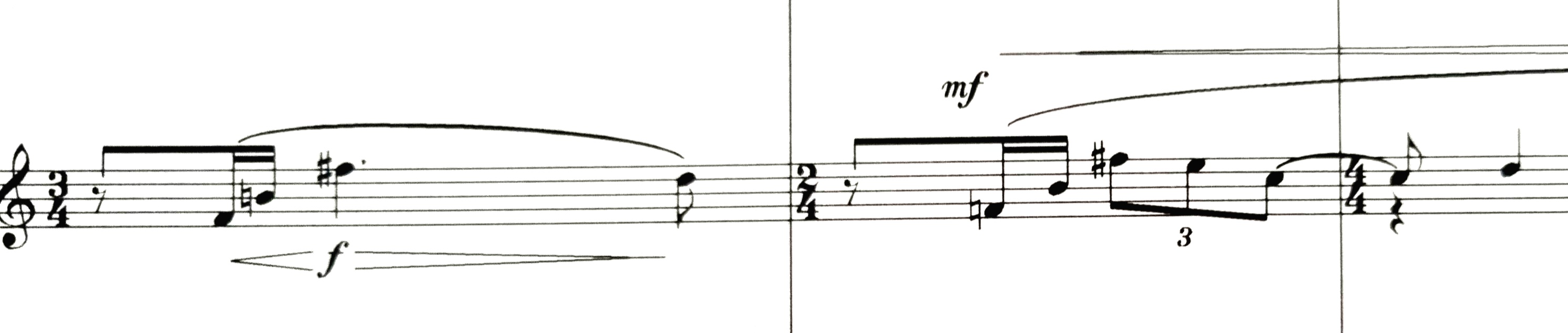
The theme centres on the contrast between a perfect fifth and a diminished fifth, or tritone. Stability and tension are thus present in its basic structure, expressing the conflict between a child’s perspective and the adult world.
II / The Rose’s theme
Between major and minor
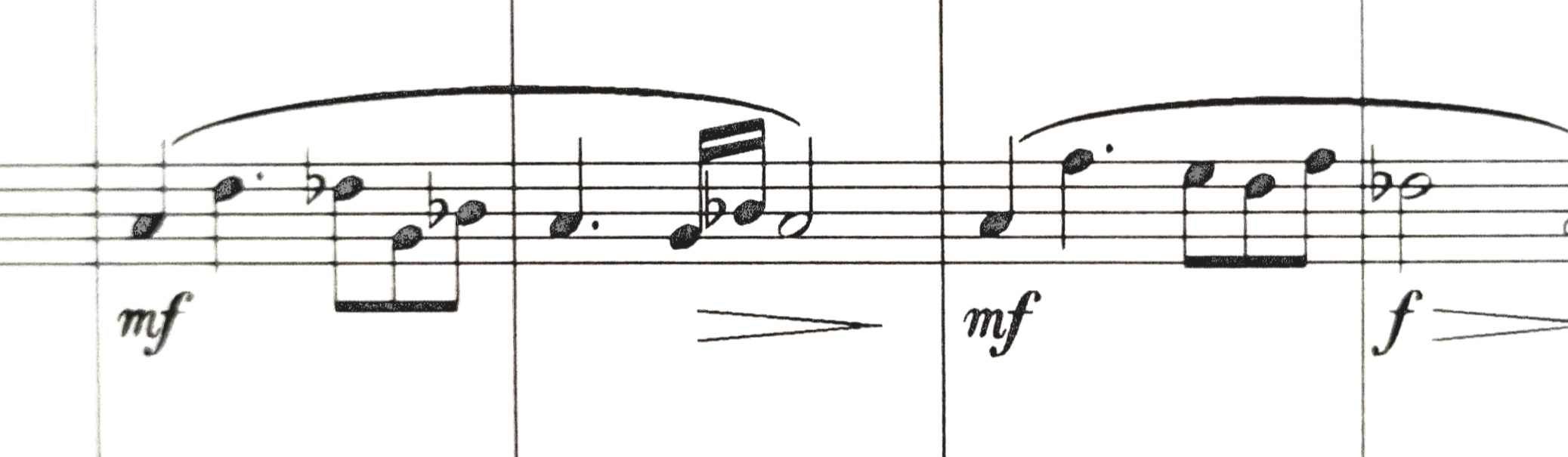
The theme opens with a perfect fourth; a major or minor third then gives it a major- or minor-mode colouring. The same musical material can therefore express the Rose’s tenderness, uncertainty or demanding nature.
The Pilot and flight: connections with the principal themes
The Pilot’s theme
A mirror image
The Pilot’s theme is a mirror image that both reflects and extends the Little Prince’s theme. Their musical kinship presents child and adult as two sides of one personality. A falling third after the broad ascent in the Little Prince’s theme provides a further connection.
The flight theme
A chromatic connection
Chromatic elements connect the flight theme with the Pilot’s. In the narrative, flight also carries a longing to transcend limitations. Its role is connective, while the Little Prince and the Rose remain the two principal thematic foundations.
How does the material develop?
In The Encounter, thematic layers intertwine in an orchestral stretto. The Dream Waltz transforms the Rose’s theme into major, while the finale gradually assembles the Little Prince’s material into a closing C-major sonority. The characters’ musical connections emerge through the return and transformation of familiar material.
Musical examples
The Little Prince’s theme
The Rose’s theme
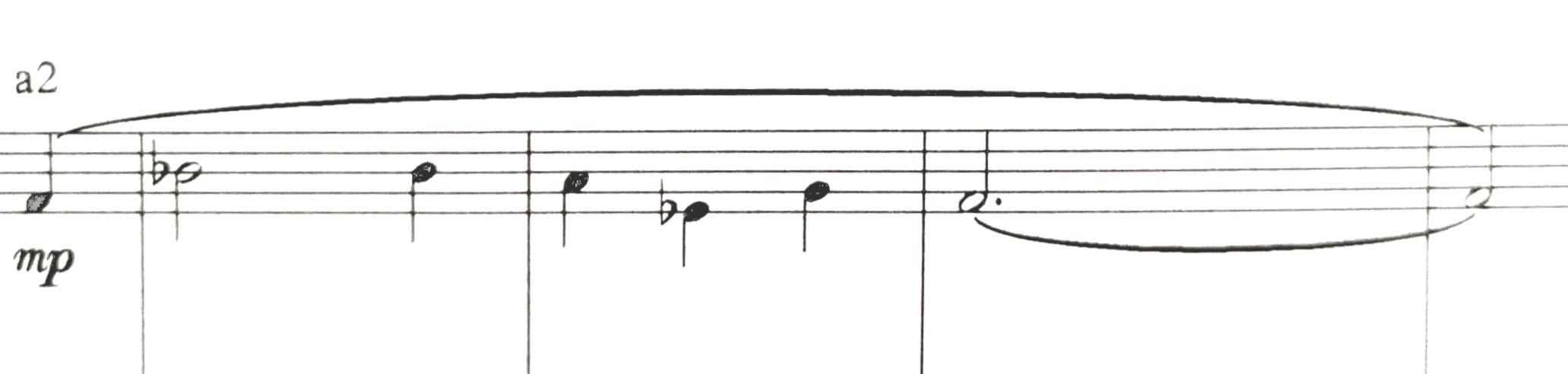
The Rose’s theme in its major-mode transformation in the Dream Waltz
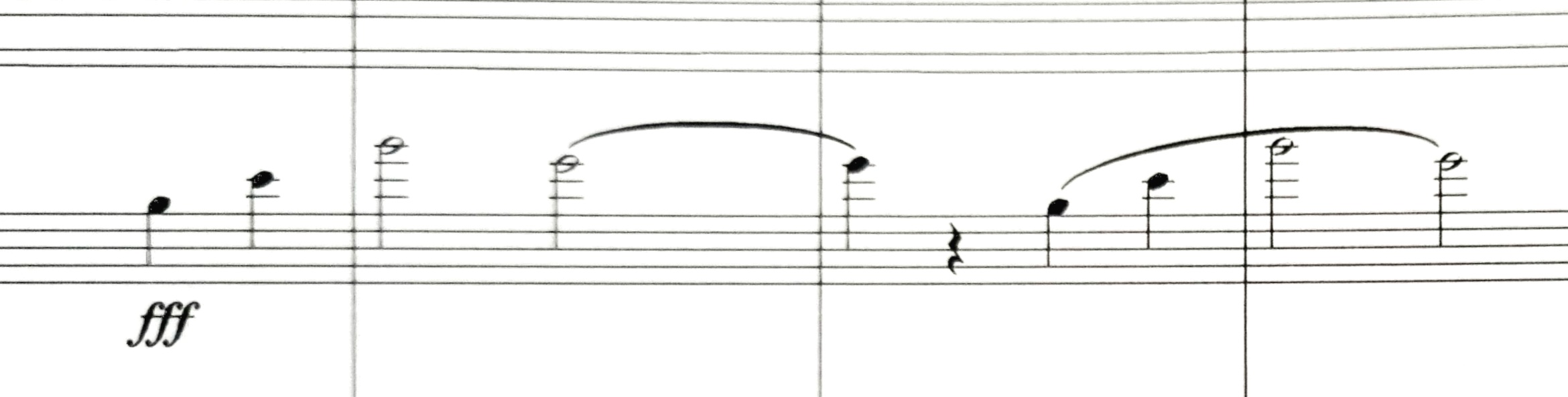
The Little Prince’s transformed theme in the finale
Thematic development and music scene by scene
The themes undergo changes ranging from individual intervals to harmony and musical form. The contrasts between perfect and diminished fifths and between major and minor thirds expand into a relationship between tonality and atonality. The tension between order and fragmentation follows the characters’ inner conflict.
The Dream Waltz: transforming memory
The Dream Waltz introduces a major-mode transformation of the Rose’s theme. The memory of pure first love initially takes on a cinematic nostalgia; the material then fragments, ending in an incomplete, fragmented period. Musical form itself enacts the loss of idealised intimacy.
Settings, characters and narrative
The scenes do not always serve a single function. The Desert, the Earth and Asteroid B612 establish settings; the Pilot, the Rose and the planets’ inhabitants portray characters; the Rose Garden, Dream Waltz and Tango function as dances. The Encounter, Transition, Farewell and Finale carry the narrative forward. These functions intertwine throughout the suite.
05 / Orchestral colours and scenes
Every character has a sound.
Symphonic thought and a narrative for dance
Composing the suite meant reconciling several demands: the music had to allow for dance, communicate with children and preserve the literary source’s philosophical and psychological depth. The composer therefore combines narrative with symphonic development and symbolic layers that operate beyond the immediate stage action.
The different styles are more than touches of colour. The Rose Garden’s ritornello emphasises recurrence; the waltz evokes a nostalgic memory of innocent love; the tango connects taming with the disciplining of passion. The cinematic nostalgia of the Dream Waltz gradually fragments, while the Earth’s sharply rhythmic fabric, percussion and insistent brass convey the confinement of a world obsessed with business. The music of Asteroid B612 also includes a recognisable children’s taunting motif.
The theatre of the adult world
The variety of genres and styles in the “theatre of the adult world” explores human existence in all its contradictions: from the desire for closeness to the hunger for power, from vanity to cold calculation. Each character speaks a distinct musical language; together they portray a world that eludes a child’s understanding and often reveals disturbingly grotesque features. Stylistic diversity thus becomes a way of exploring humanity and its masks.
The DesertBeauty and danger in the same space
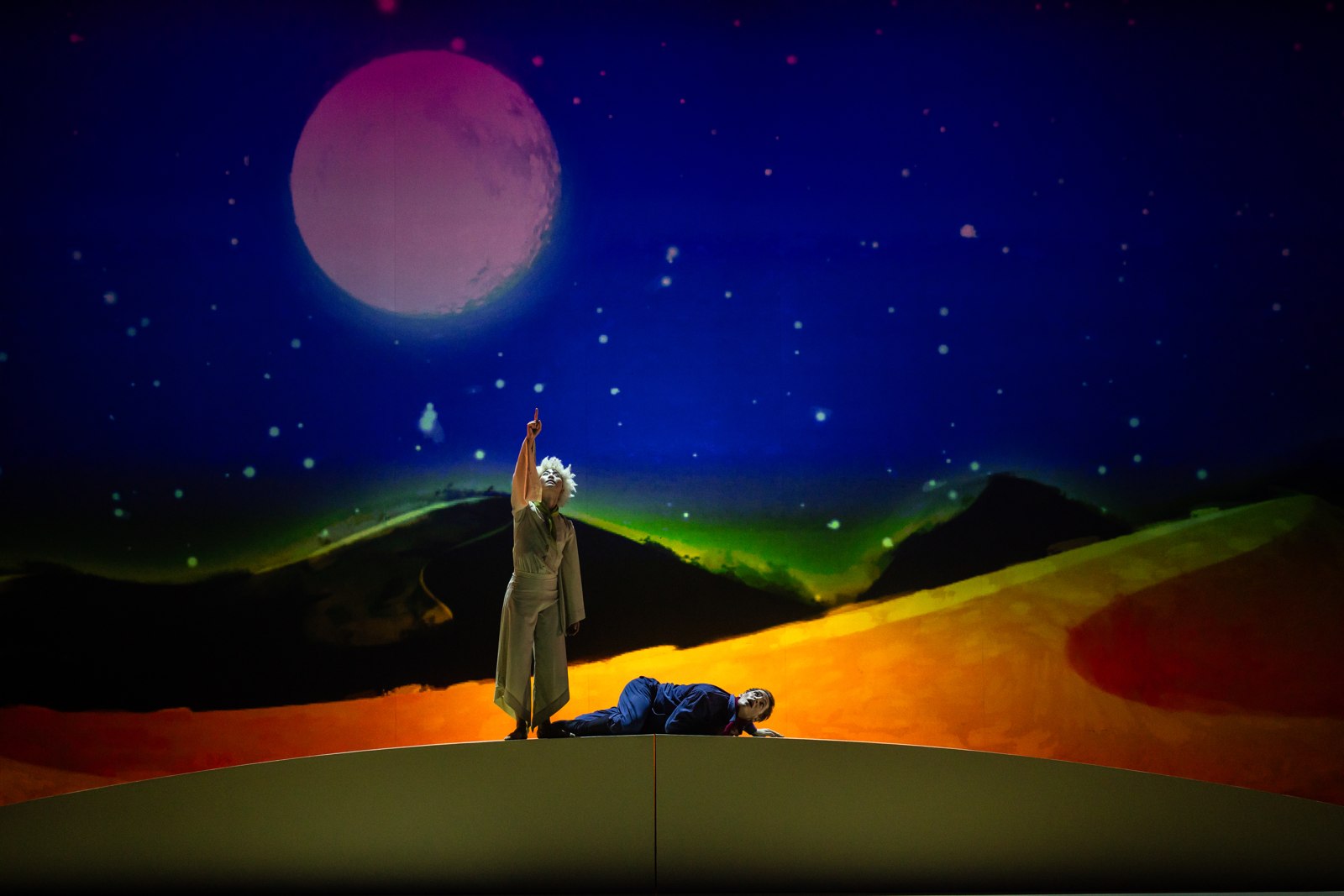
Harmonic blocks in Messiaen’s fourth mode are connected by a veiled muted-trumpet line in half notes, evoking the ridges of sand dunes. The desert holds stars, a hidden well and revelation, but is also a place of mortal danger and the Snake’s home.
Asteroid B612The manageable world of childhood
Cheerful, carefree material portrays a microcosm in which everything has its place. It appears three times: in the Overture, in the planet’s own scene, and immediately after the tragic farewell, as the Little Prince returns to his absent yet secure home world.
Transition — The Little Prince’s JourneyThe sound of infinity
Harp, celesta and flexatone shape the journey’s sound. Their shimmering, chiming colours suggest scattered stars and boundless space.
The KingA poignant, comic grandeur
A modal brass chorale combines authority with loneliness. An interlude in the form of a galliard introduces the humorous act of moving the throne for the next command to the Sun.
The LamplighterCeaseless acceleration
An ever-moving world is marked by bells as the lights are lit. The tempo continually accelerates until the activity becomes an unstoppable cycle.
The Vain ManShowing off in the trumpet’s spotlight
A trumpet solo flirts with jazz. The exposed solo voice becomes a musical gesture of a character who needs admiration.
The BusinessmanThe orchestra as an inventory
Temple blocks take over the counting of stars. The secco rhythms of the orchestra persistently catalogue wealth, creating an unfeeling mechanism of appropriation.
The DrunkardStaggering
The character is entrusted to the trombone. Its musical gesture physically evokes instability and entrapment in repetition.
The GeographerRational order
The bassoon presents a complete tone row, portraying a scientific, rational order. Emotional warmth emerges only briefly, as the Geographer shows the Little Prince the way to Earth.
The EarthOverload rather than a panorama
Caressing, descending string sequences meet the honking of brass. The scene emphasises anxiety at the world’s oversaturation rather than its natural beauty.
The Rose Garden — RitornelloMultiplicity without uniqueness
The symphony orchestra imitates a wind band in a ritornello and cancan. A glittering surface accompanies a multitude of roses in which a sense of personal, unrepeatable substance is lost.
The Pilot and the Rose — Dream WaltzA monument to young love
The classical dance form recalls the authenticity of falling in love. The Rose’s major-mode theme gradually disintegrates through nostalgia; the ending offers no complete formal closure.
The Fox — TangoFrom taming to familiarity
The tango connects taming with the disciplining of passion. Its introduction portrays the shyness of a first approach; its conclusion conveys friendship and familiarity, already signalling the transition to the ending.
FarewellThe well, loss and return
The narrative returns to the desert, sunrise and the well. Water is characterised by transparent, polyrhythmic atonal counterpoint in the woodwinds; the Little Prince’s death by a string larghetto with harp in unison.
06 / The musical journey’s conclusion
Finale. Reassembled from fragments.
The musical narrative ends; the literary figure endures.
The Pilot’s self-awareness, repair of the plane and take-off lead to the conclusion of the musical narrative. The transformed Little Prince theme gradually coalesces into a triumphant C-major six-four chord; the closing cadence brings together the full orchestra on a brass foundation. This ending is conceived neither as catharsis nor as the hero’s apotheosis, but as a celebration of the literary masterpiece and the figure of the Little Prince. In the interview, the composer stresses that the closing transformation removes the theme’s initial instability, while the falling third remains a recognisable trace of the Pilot and the Little Prince’s shared thematic world.
07
On the ballet stage
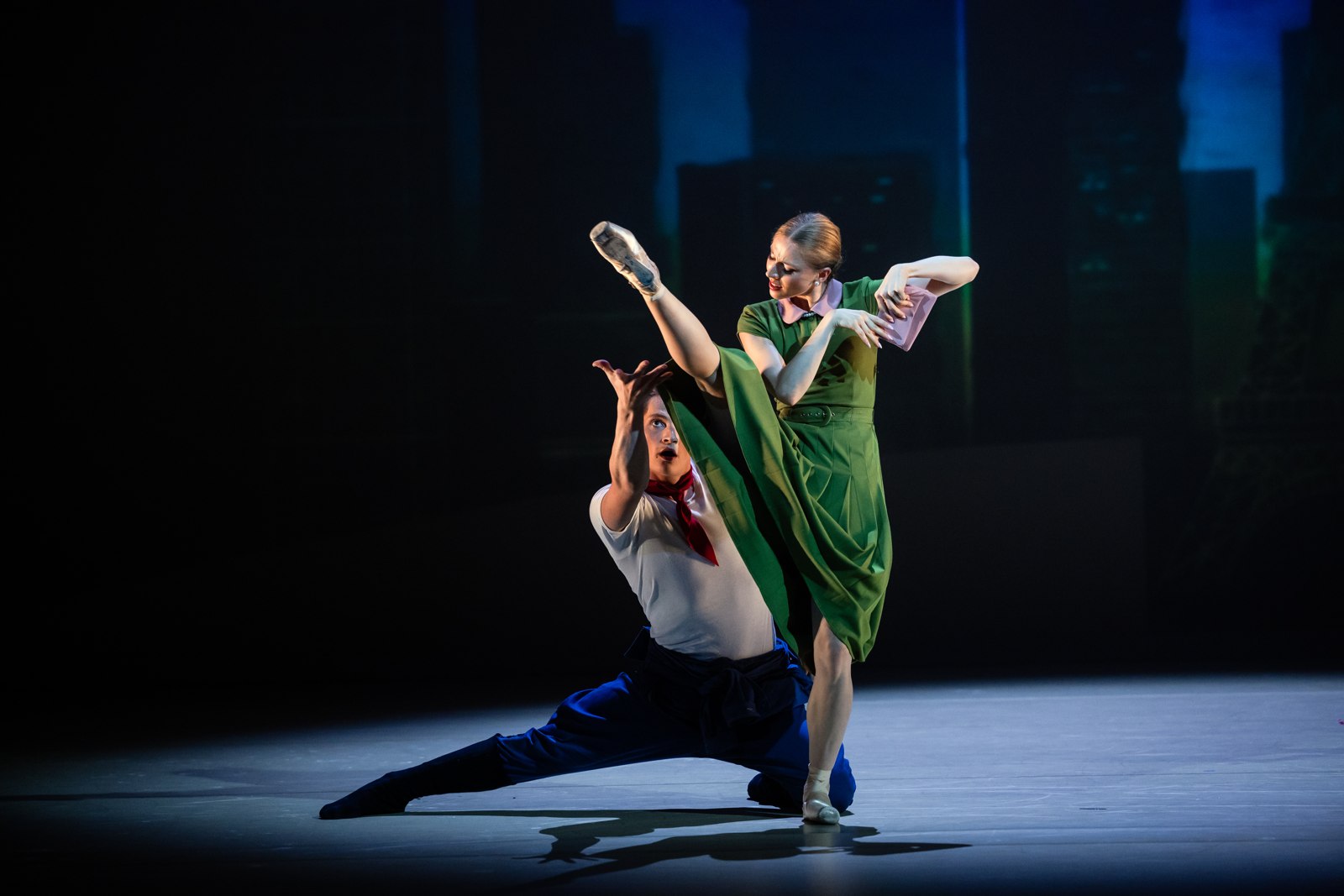
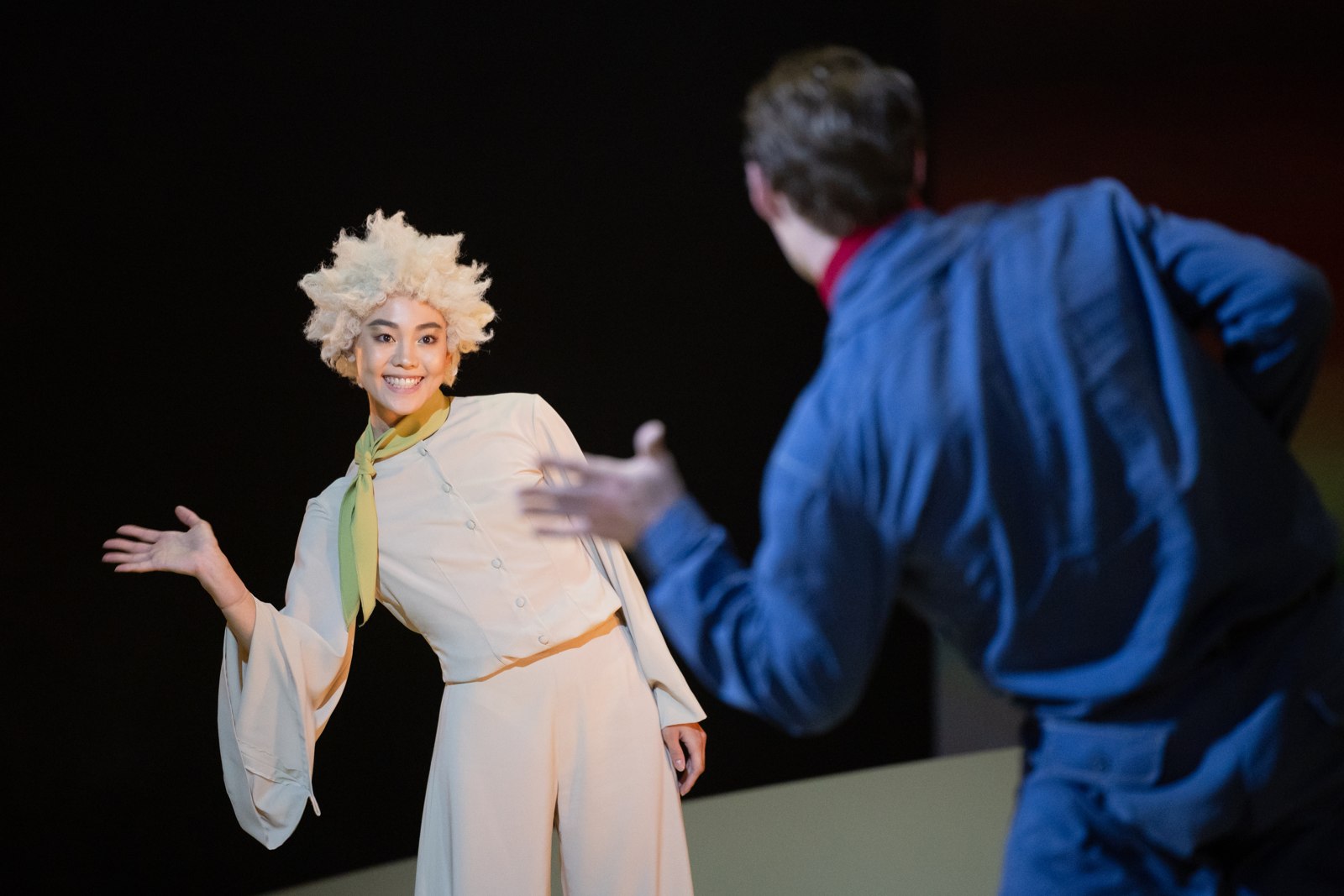
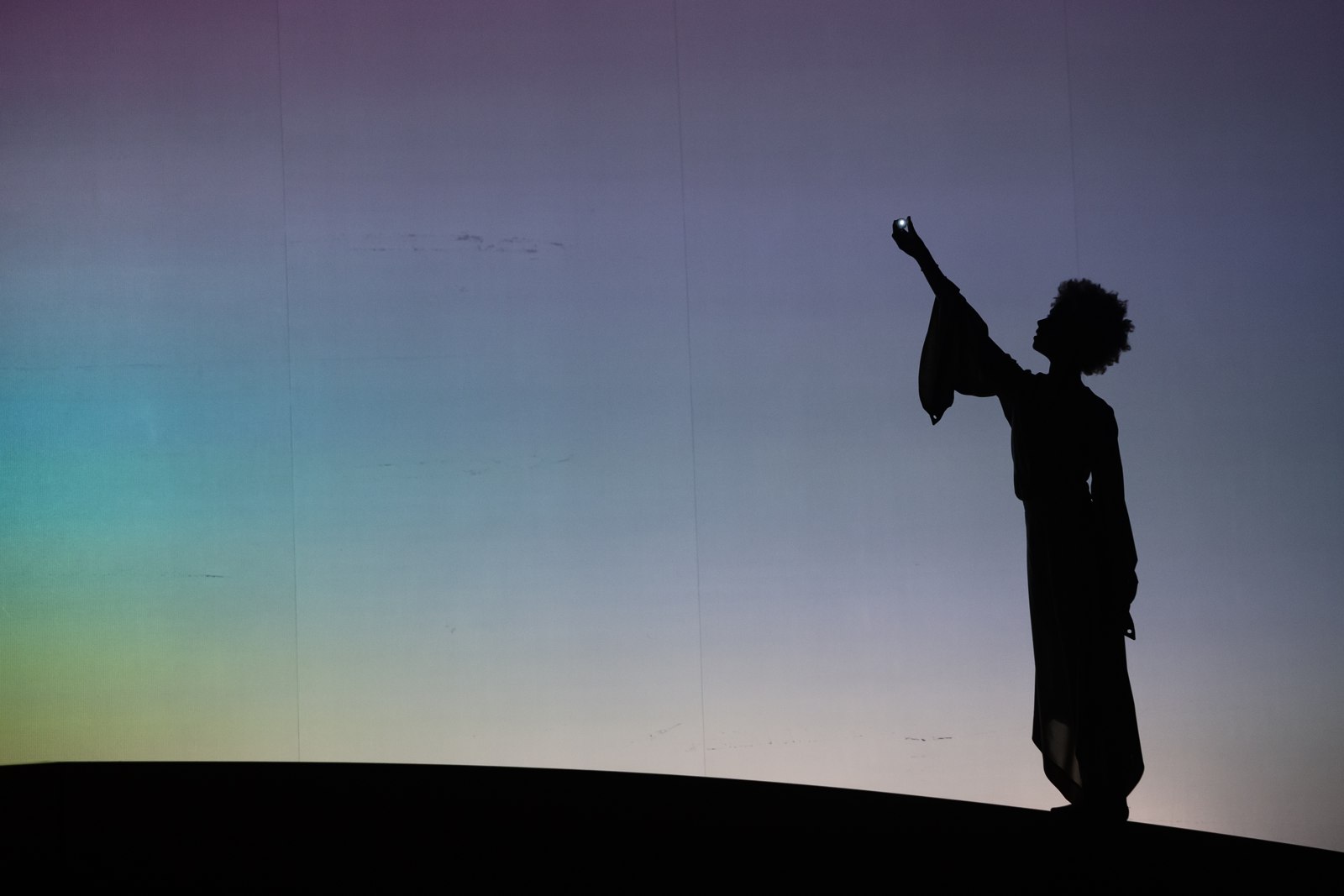
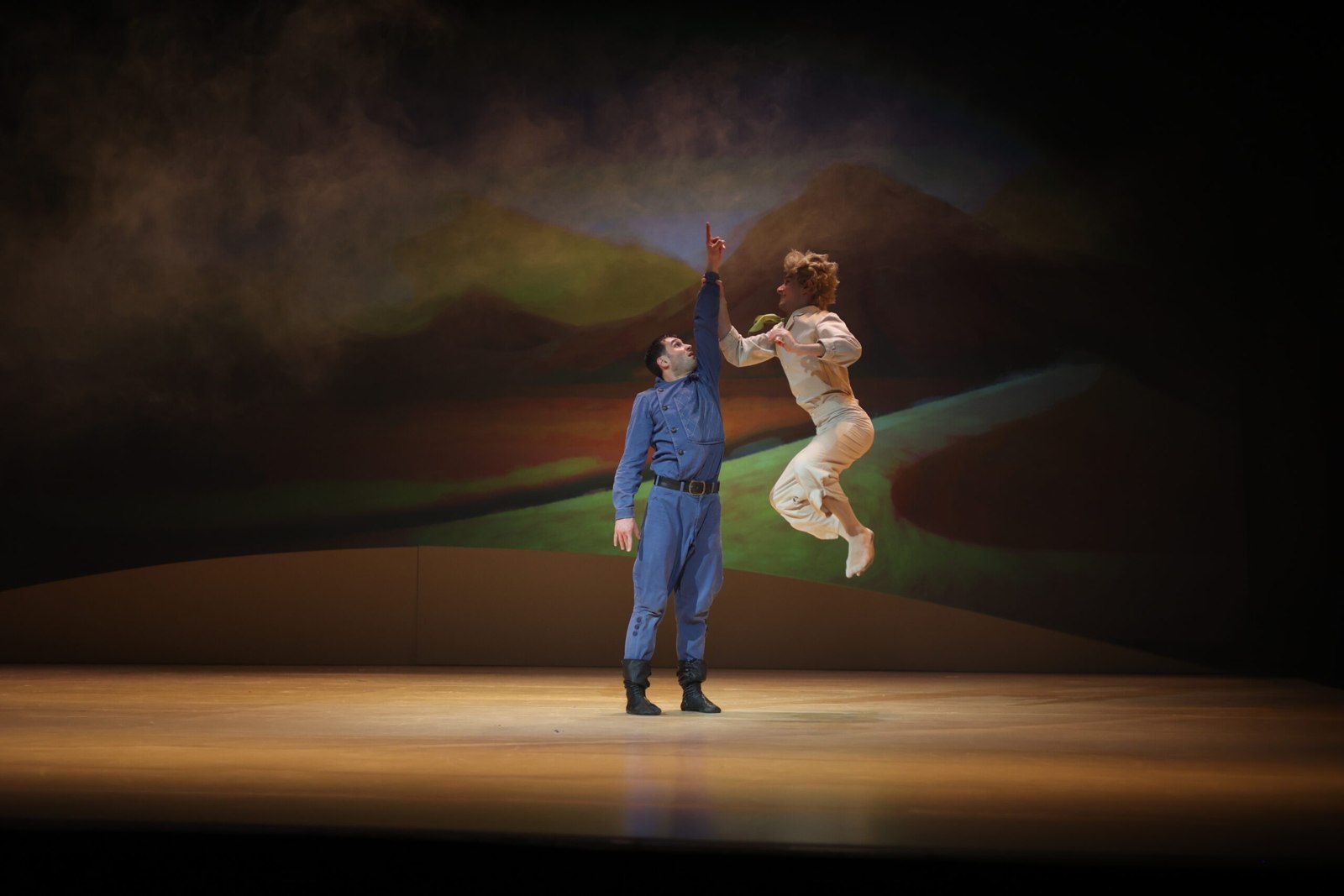
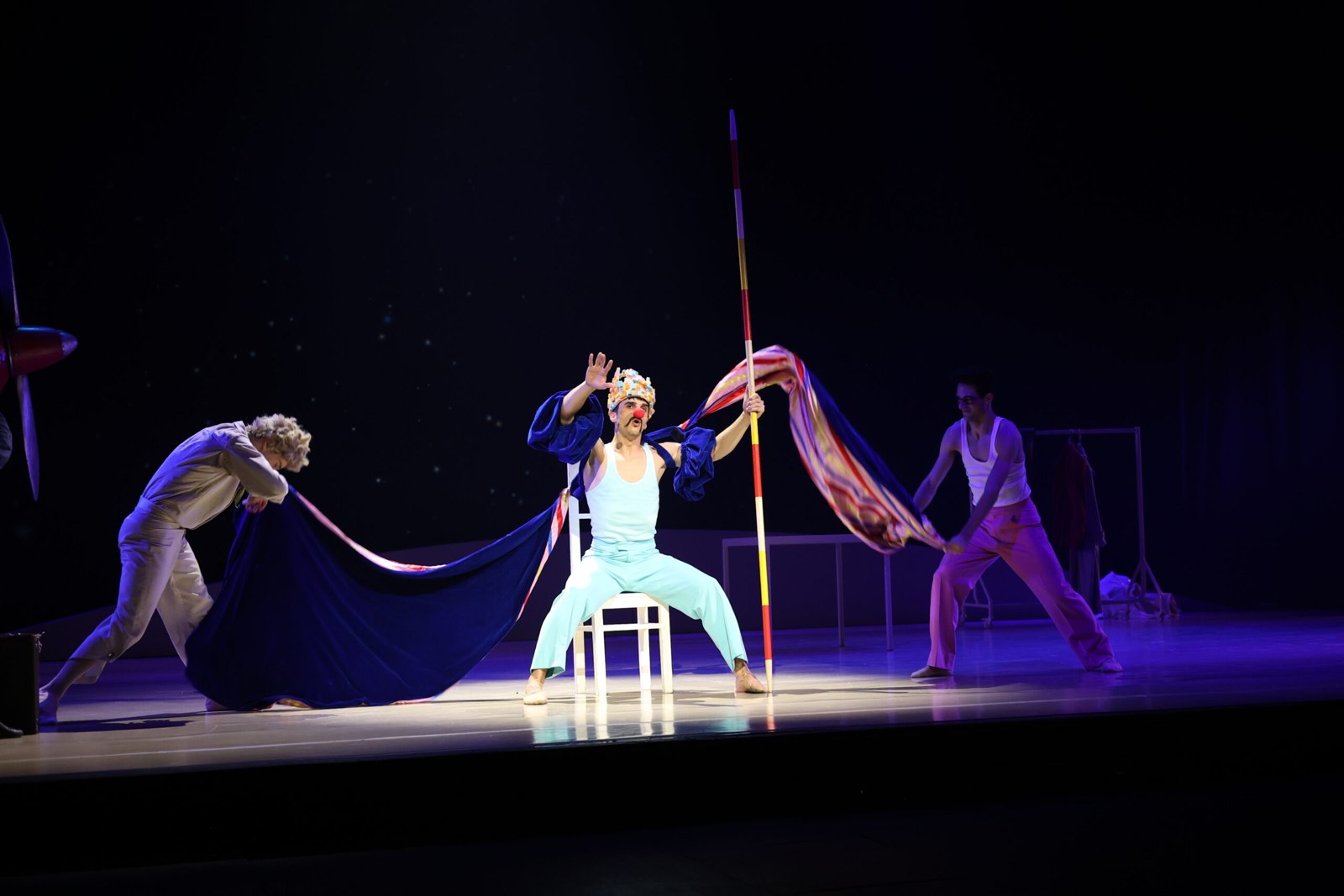
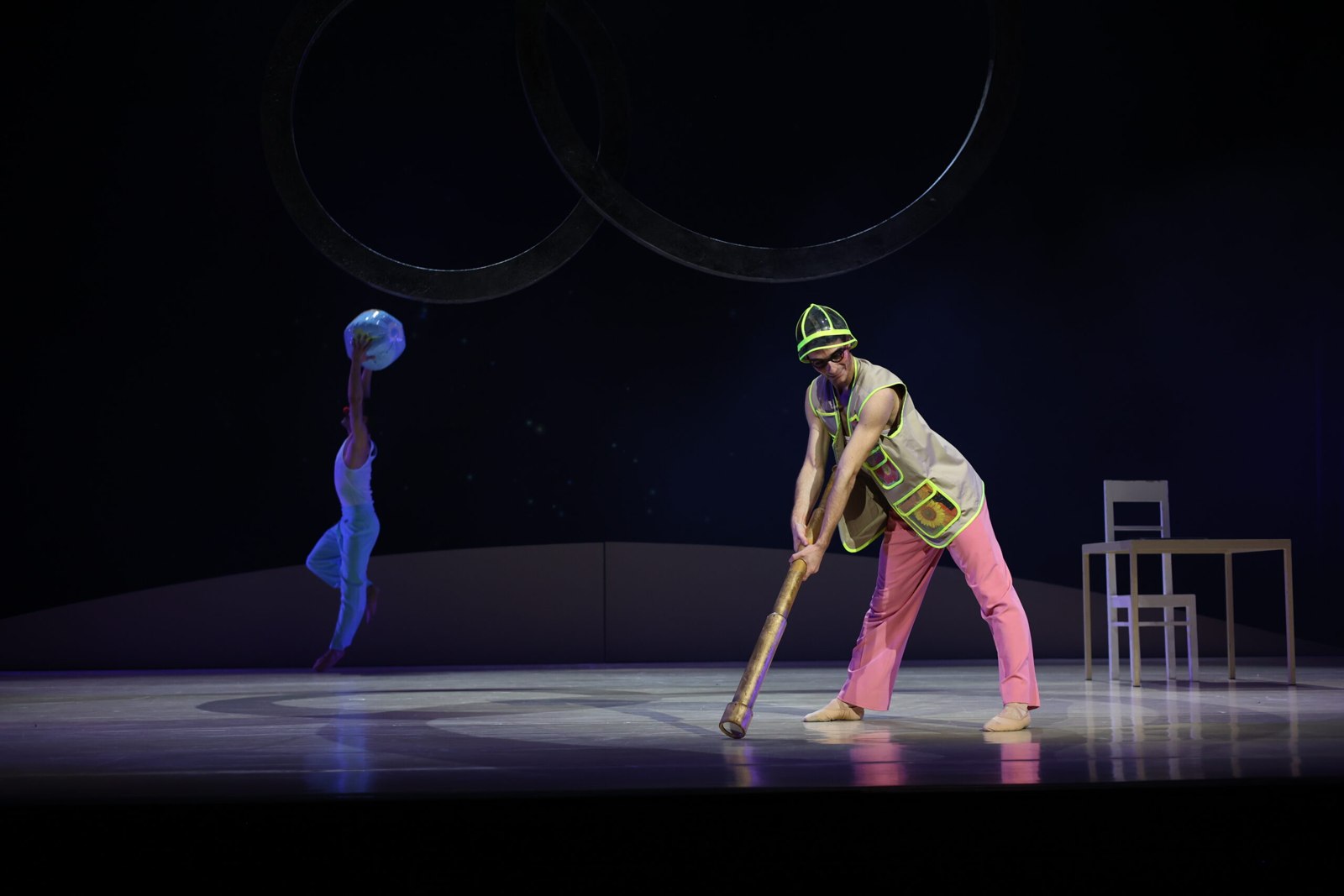
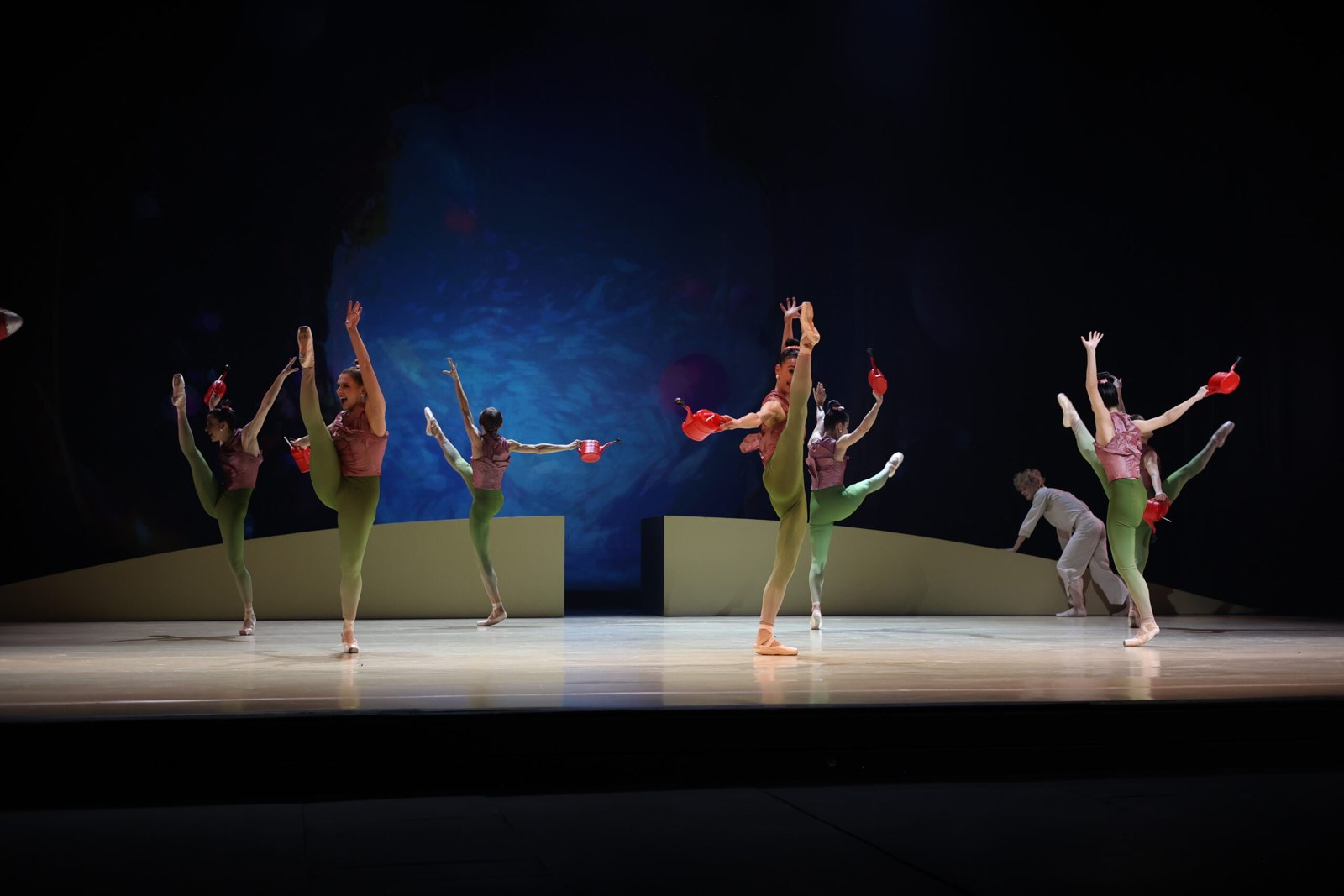
Aleksandra Naumovski Potisk’s symphonic suite is the constitutive musical foundation of the ballet The Little Prince, for which Lukas Zuschlag created the choreography. The ballet was staged at SNG Opera in balet Ljubljana (world premiere on 6 September 2024) and HNK Ivana pl. Zajca in Rijeka (premiere on 13 February 2026). The music was recorded in August 2024 at Radio Slovenia’s Studio 26 by the Symphony Orchestra of SNG Opera in balet Ljubljana, conducted by Ayrton Desimpelaere.
Through 21 April 2026: 20 in Ljubljana, 2 in Krško and 12 in Rijeka.
Past performances
Past performances · 2024–2026
No.
Date
Time
Venue
1
18:00
SNG Opera in balet LjubljanaLjubljana premiere
2
17:00
SNG Opera in balet Ljubljana
3
18:30
SNG Opera in balet Ljubljana
4
10:00
SNG Opera in balet Ljubljana
5
11:30
SNG Opera in balet Ljubljana
6
10:00
SNG Opera in balet Ljubljana
7
11:30
SNG Opera in balet Ljubljana
8
10:00
SNG Opera in balet Ljubljana
9
11:30
SNG Opera in balet Ljubljana
10
10:00
SNG Opera in balet Ljubljana
11
17:00
SNG Opera in balet Ljubljana
12
18:30
SNG Opera in balet Ljubljana
13
11:00
Kulturni dom Krško
14
18:00
Kulturni dom Krško
15
17:30
SNG Opera in balet Ljubljana
16
19:30
SNG Opera in balet Ljubljana
17
17:30
SNG Opera in balet Ljubljana
18
19:30
SNG Opera in balet Ljubljana
19
10:00
SNG Opera in balet Ljubljana
20
11:45
SNG Opera in balet Ljubljana
21
10:00
SNG Opera in balet Ljubljana
22
11:45
SNG Opera in balet Ljubljana
23
19:30
HNK Ivana pl. Zajca, RijekaRijeka premiere
24
18:00
HNK Ivana pl. Zajca, Rijeka
25
12:00
HNK Ivana pl. Zajca, Rijeka
26
12:00
HNK Ivana pl. Zajca, Rijeka
27
19:30
HNK Ivana pl. Zajca, Rijeka
28
18:00
HNK Ivana pl. Zajca, Rijeka
29
12:00
HNK Ivana pl. Zajca, Rijeka
30
19:30
HNK Ivana pl. Zajca, Rijeka
31
12:00
HNK Ivana pl. Zajca, Rijeka
32
19:30
HNK Ivana pl. Zajca, Rijeka
33
18:00
HNK Ivana pl. Zajca, Rijeka
34
19:30
HNK Ivana pl. Zajca, Rijeka
Concert performance of excerpts
19 September 2024 at 19:30 · Season 2024/25 Opening Concert, SNG Opera in balet Ljubljana. This performance of excerpts is listed separately and is not included in the ballet performance total.
Photo gallery
Selected photographs from the official galleries of SNG Opera in balet Ljubljana and HNK Ivana pl. Zajca. Select a photograph to enlarge it.
SNG Opera in balet Ljubljana Photo: Darja Štravs Tisu Source ↗SNG Opera in balet Ljubljana Photo: Darja Štravs Tisu Source ↗SNG Opera in balet Ljubljana Photo: Darja Štravs Tisu Source ↗SNG Opera in balet Ljubljana Photo: Darja Štravs Tisu Source ↗HNK Ivana pl. Zajca Photo: Dražen Šokčević Source ↗HNK Ivana pl. Zajca Photo: Dražen Šokčević Source ↗HNK Ivana pl. Zajca Photo: Dražen Šokčević Source ↗HNK Ivana pl. Zajca Photo: Dražen Šokčević Source ↗
Reviews
Music that tells a story.
Selected critical responses to the ballet The Little Prince, the source of the symphonic suite. All excerpts are translated into English.
»Alongside the excellent set design and choreography, it is above all the music that enables the ballet to tell the Little Prince’s multilayered story without dialogue.«
Jakob Spindler Review dated 12 September 2024 · ANP.si, published 15 June 2026 Read source ↗
»It has been a long time since we had the opportunity to hear such a fine, high-quality musical work from a contemporary composer.«
»Aleksandra Naumovski Potisk’s score shapes motifs that transform in step with the characters’ inner development.«
Ornella Sciucca La Voce del popolo · 17. 2. 2026 Read source ↗
The composer’s perspective
When a work takes on a life of its own.
The score becomes the starting point for an encounter between the work, its performers and its listeners.
For Aleksandra Naumovski Potisk, a completed composition must eventually live independently of its creator. The composer’s intention remains in the score, while performers take responsibility for its realisation in sound. New interpretations do more than repeat an initial idea: they continue the work’s life.
The literary source likewise remains open to new readings. For the composer, The Little Prince is an adventure, a prose poem, a love story, a philosophical narrative and a social critique. Each return to the text reveals new questions.
Based on Aleksandra Naumovski Potisk’s answers for HNK Ivana pl. Zajca on the occasion of the Rijeka production. Material from the interview is incorporated thematically into the presentation of the suite.
08 / Score and contact
Enter the musical world.
For information about the score, performance materials and concert performances of the suite, please contact the composer.
Content and musical examples based on: the composer’s presentation at anp.si. Production information: SNG Opera in balet Ljubljana and HNK Ivana pl. Zajca.